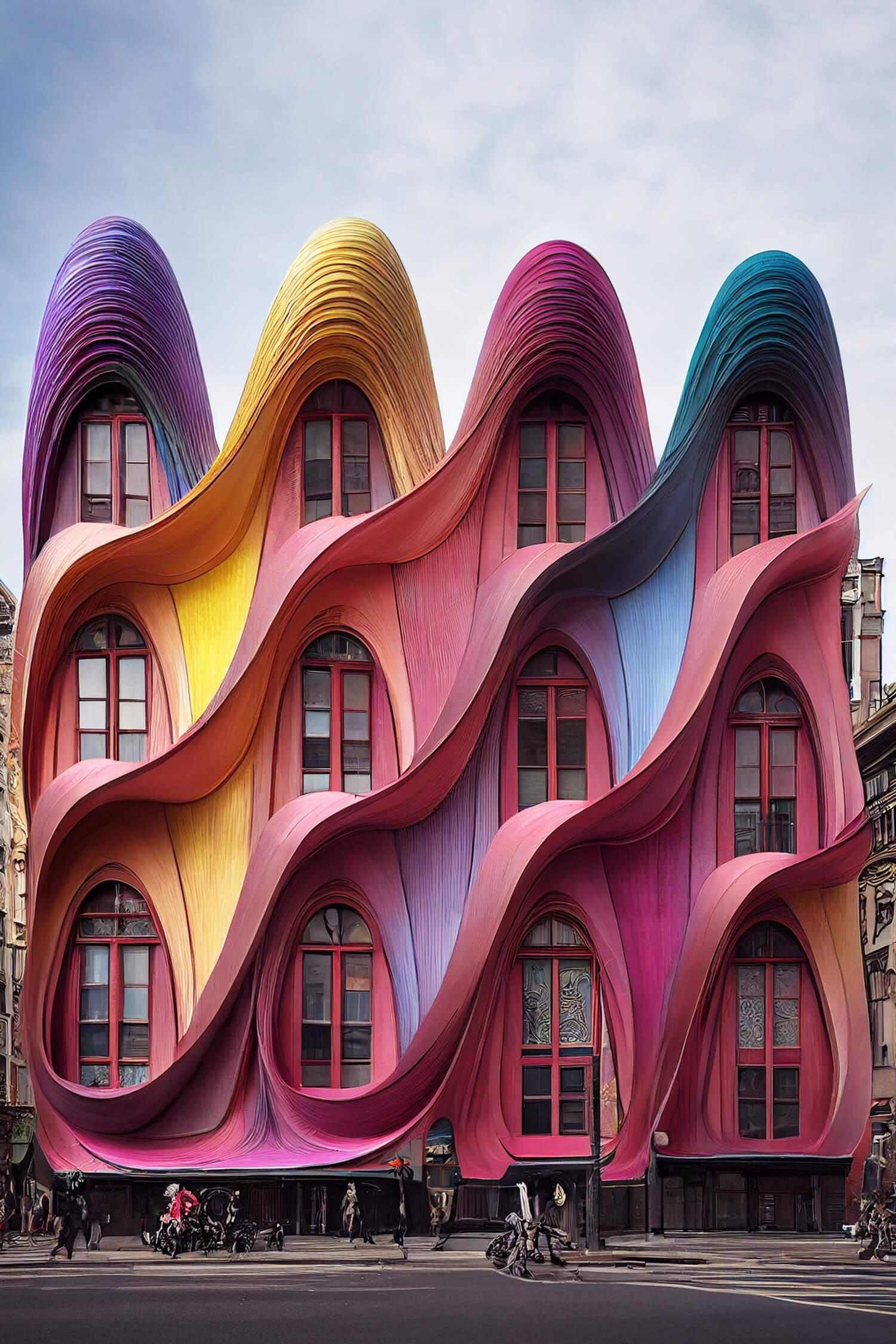
AI in Architecture: Revolution or Risk?
A new study by the American Institute of Architects (AIA) in collaboration with Deltek and Construct Connect has laid out the current landscape of artificial intelligence (AI) in architecture, highlighting its transformative potential along with emerging risks. Titled “Artificial Intelligence Adoption in Architecture Firms: Opportunities & Risks,” the study is the latest installment in The Architect’s Journey to Specification series, which acts as a beacon for the industry’s evolving relationship with technology.
Derek Guffey, Assoc. AIA, LEED AP, Vice President of Sales for the Building Product Manufacturers Segment at ConstructConnect, comments, “AI is transforming the design industry, creating both challenges and opportunities for Building Product Manufacturers. This research offers key insights into AI and its impact on go-to-market strategies and product selection in this brave new world. The Journey to Specification serves as a guidepost for manufacturers planning for an AI-driven future.”
The report’s findings paint a modest picture of AI integration within the profession, with only 6% of architects routinely utilizing AI tools such as chatbots, image generators, and grammar/text analytics to streamline their workflows.
Notably, AI usage is more prevalent among younger architects, particularly those under 50. A mere 8% of firms have fully integrated AI solutions into their operations, although another 20% are in the process of doing so. Larger firms are typically the early adopters, spearheading this technological shift.
Optimism about AI’s potential to automate mundane tasks and assist with product research is high, with 84% and 74% of respondents affirming these benefits, respectively. However, the enthusiasm is tempered by significant concerns over AI’s accuracy, potential misuse, security risks, authenticity issues, and transparency about data usage.
Chris Metropulos, AIA, CSI, LEED AP, Senior Director of Product Management at Deltek, offers a reassuring perspective: “”The future of architecture isn’t about AI replacing human creativity – it’s about AI enhancing it,” he says. “When we automate routine tasks, we create more space for innovation, allowing architects to focus on what they do best: designing spaces that create lasting value.”
For those in the architectural field eager to understand the nuances of AI adoption, the full report “Artificial Intelligence Adoption in Architecture Firms: Opportunities & Risks” is available on the AIA’s website, providing a deep dive into the ongoing integration of AI in architectural practices.
Author:
Paul Makovsky
Publish Date:
03/11/25
Category:
Feature
Core Arguments/Data
Introduction: The AI Revolution in Architecture
Artificial intelligence is no longer science fiction—it’s reshaping architecture and construction at an unprecedented pace. By 2030, the global AI in architecture market is projected to reach $4.5 billion, with AI-driven design tools already reducing planning time by 40% . While some fear AI could replace architects, others see it as a powerful collaborator, enhancing creativity and efficiency.
AI in Design & Planning: From Sketches to Smart Structures
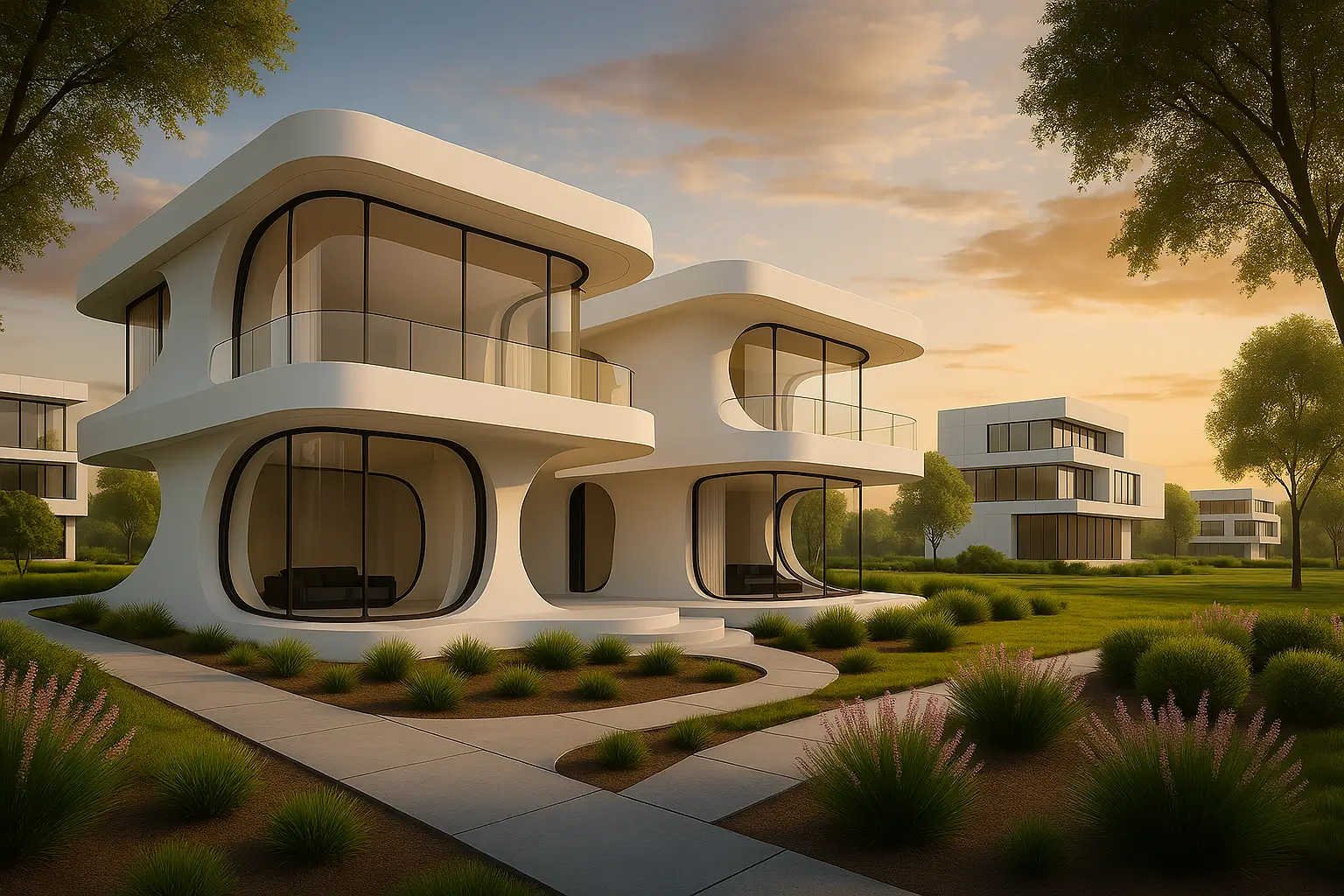
1. Generative Design: AI as a Co-Creator
Tools like Autodesk’s Dreamcatcher and TestFit use AI to generate thousands of design variations in minutes, optimizing for:
Space efficiency (e.g., maximizing square footage in luxury homes)
Sustainability (AI-powered energy modeling for net-zero buildings)
Aesthetics (mimicking styles from mid-century modern to futuristic)
2. Error Reduction & Compliance
AI checks designs against building codes and safety regulations, flagging conflicts before construction begins.
Example: Swapp’s AI reduced rework by 30% on a high-rise project in NYC.
3. 3D Modeling & Virtual Reality
AI-powered rendering (e.g., Midjourney for architecture) creates photorealistic visuals in seconds.
Clients can walk through VR models adjusted in real-time based on feedback.
AI in Construction Efficiency: Robots, Predictive Analytics & More
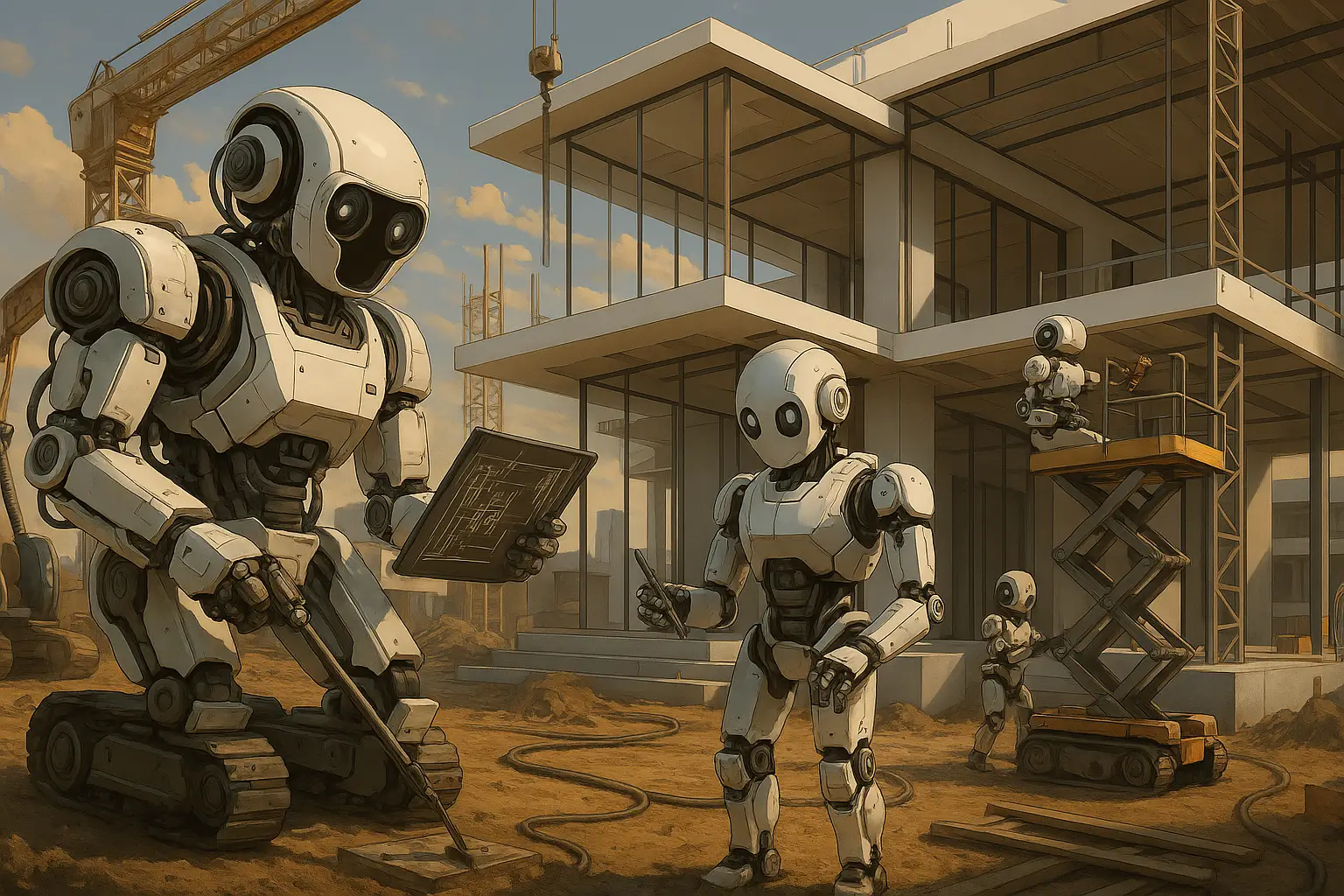
1. Robotics & Automation
Boston Dynamics’ Spot scans construction sites for progress tracking.
SAM (Semi-Automated Mason) lays bricks 5x faster than human workers.
2. Predictive Analytics for Risk Management
AI predicts delays (e.g., weather, supply chain issues) with 90% accuracy.
Smart scheduling tools like ALICE Technologies optimize workflows, cutting costs by 15%.
3. AI in Project Management
Chatbots handle subcontractor queries 24/7.
Computer vision monitors safety compliance (e.g., hard hat detection).
Will AI Replace Architects? The Human vs. Machine Debate
Why AI Won’t Replace Architects (Yet)
Creativity Gap: AI lacks human intuition for cultural context and emotional design.
Client Relations: Trust and collaboration still require human architects.
Ethical & Legal Risks: Who’s liable for an AI-designed building failure?
Jobs Most at Risk
Drafters (AI automates CAD drawings)
Quantity Surveyors (AI estimates costs in real-time)
Inspectors (Drones + AI analyze structural integrity)
“AI won’t replace architects—but architects using AI will replace those who don’t.”
— Phil Bernstein, Yale School of Architecture
Case Studies: AI in Action
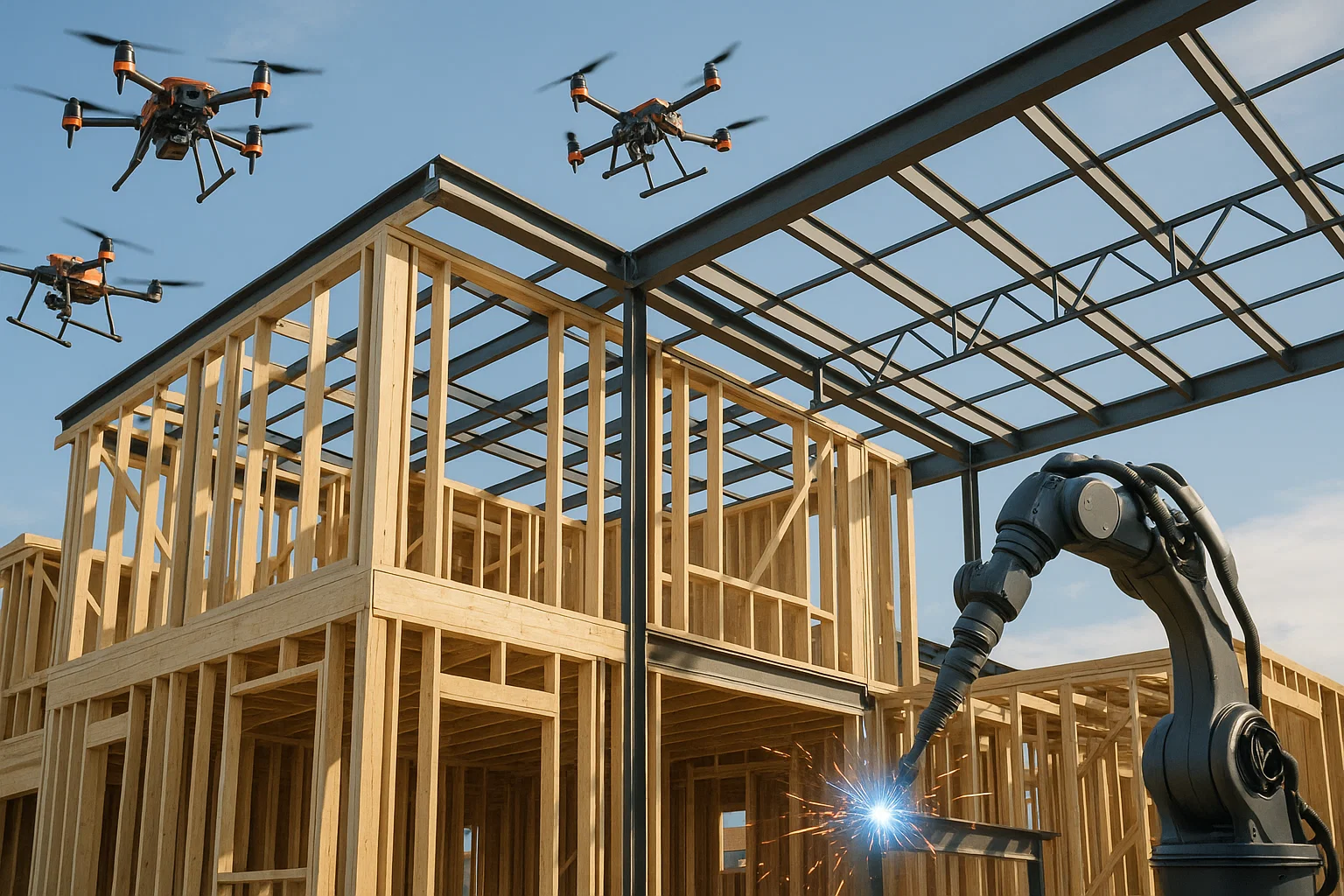
1. Luxury Residential: The AI-Designed “Villa Algorithm”
Generative AI optimized ocean views and passive cooling.
Construction drones ensured precise material placement.
2. Commercial: Shanghai’s “AI Tower”
Algorithmic design reduced steel usage by 20%.
Robotic welders assembled the frame in record time.
Conclusion: Embracing AI as a Design Partner
The future of architecture isn’t AI vs. architects—it’s AI + architects. By automating repetitive tasks, AI frees designers to focus on what truly matters:
Pushing creative boundaries (AI can’t replace Frank Gehry’s whimsy).
Deepening client relationships (storytelling and trust are human superpowers).
Solving global challenges (affordable housing, climate resilience).
🚀 Ready to Harness AI in Your Projects?
👉 Book a consultation to explore AI-driven design solutions for your next build.
In-depth Analysis